.png)
The Reality of Buying Akiya: A Practical Guide for Foreigners

Understanding Akiya Homes in Japan
The internet has turned rural Japan into a kind of aesthetic fantasy. Imagine rain outside old wooden windows, cats sleeping on engawa, and quiet roads winding through the countryside. Picture a traditional kominka surrounded by mountains. The beauty is real.
However, aesthetics do not equate to livability. Many foreigners discover akiya homes through platforms like YouTube, Instagram, TikTok, or Pinterest. Social media tends to edit out the inconveniences. Nobody films the mold smells, insects, contractor delays, or the isolation that some people feel after moving to rural Japan.
The Peaceful Yet Isolated Countryside
The countryside in Japan can indeed feel peaceful. But peace and loneliness are closely related, especially in shrinking towns where schools close, businesses disappear, and younger generations move away.
The Romanticized View of Akiya
Most foreigners romanticize akiya houses, but the reality can be quite different. Cheap houses in Japan are often inexpensive due to structural or demographic reasons, not because a hidden paradise is waiting to be discovered.
Some foreigners genuinely build meaningful lives in rural Japan. They usually succeed because they approach the experience realistically, not because they chased an internet fantasy.
The Challenges of Akiya Ownership
Legal Procedures and Costs
When considering purchasing an akiya, it’s essential to understand the legal procedures involved. The process can be complex, especially for foreigners. You might need to engage with local authorities and navigate the Japanese property system.
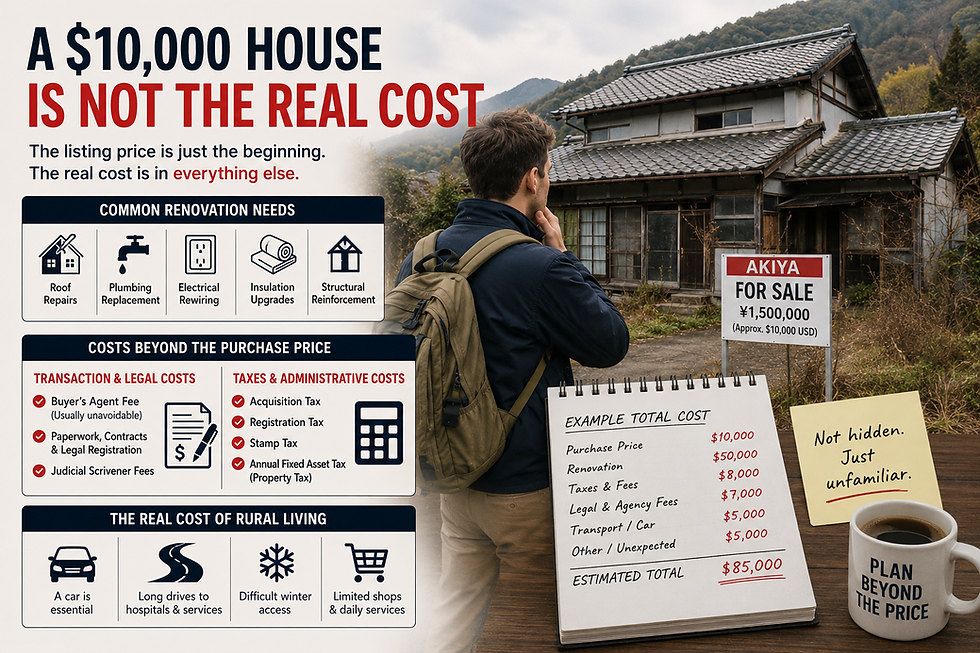
Costs can add up quickly. Beyond the purchase price, you should factor in renovation expenses, taxes, and maintenance. It’s crucial to budget realistically and prepare for unexpected expenses.
Renovation Risks
Renovating an akiya can be both exciting and daunting. Many homes require significant repairs, and the risks involved can be substantial. Hidden issues like structural damage or outdated electrical systems may not be immediately apparent.
It’s wise to conduct thorough inspections before committing to a purchase. Hiring a local contractor who understands the nuances of rural properties can make a significant difference. They can help you identify potential problems and provide realistic estimates for repairs.
Building a Life in Rural Japan
Embracing the Local Community
One of the most rewarding aspects of living in rural Japan is the opportunity to embrace the local community. Building relationships with neighbors can provide a sense of belonging. However, it may take time and effort to integrate fully.
Participating in local events, learning the language, and showing genuine interest in the culture can help bridge the gap.
Finding Balance Between Work and Life
For those considering a move to rural Japan, finding the right balance between work and life is crucial. Many foreigners are remote workers or lifestyle changers. The tranquility of the countryside can be appealing, but it’s essential to ensure that your work aligns with your new environment.
Creating a dedicated workspace in your akiya can help maintain productivity while allowing you to enjoy the serene surroundings.
Conclusion: A Realistic Approach to Akiya Living
In conclusion, while the allure of akiya homes in rural Japan is undeniable, it’s essential to approach this journey with realism and transparency. Understanding the opportunities, risks, and challenges involved can help you make informed decisions.
By prioritizing practical guidance and focusing on building genuine connections within the community, you can create a fulfilling life in rural Japan. Remember, the journey is as important as the destination.


Comments