.png)
Navigating Japanese Bureaucracy: What Foreigners Wish They Knew Before Moving

Moving to Japan can feel exciting at first.
New surroundings.Different routines.A quieter lifestyle.Maybe even the feeling of starting over.
But for many foreigners, reality shifts very quickly after arriving.
Because almost immediately, they run into Japanese bureaucracy.
And honestly, this is the side of Japan that social media rarely talks about.
Why Japanese Bureaucracy Feels So Overwhelming at First
Japanese bureaucracy is not necessarily chaotic.
Actually, in many ways, it is highly organized.
The difficulty is that it often feels designed for people who already understand the system.
For foreigners, even simple tasks can suddenly feel exhausting:
registering an address
enrolling in health insurance
opening a bank account
receiving official letters
understanding tax notices
updating residency information
None of these things are impossible.
But when they happen all at once, in another language, inside unfamiliar systems, they can become emotionally draining very quickly.
The Japanese Bureaucracy Foreigners Encounter Immediately After Moving
One thing that surprises many newcomers is how much bureaucracy begins immediately after arriving in Japan.
Within the first weeks, many foreigners need to:
register their address at city hall
enroll in National Health Insurance
receive or update their My Number information
register pension details
set up utilities
open financial accounts
update immigration-related information
And often, each process requires:
separate forms
official stamps or signatures
physical paperwork
waiting periods
and multiple office visits
For people coming from countries with more digital systems, this adjustment can feel surprisingly intense.
Understanding My Number and Resident Registration in Japan
The My Number system alone confuses many foreigners at first.
After moving, residents are typically required to register their address with the local municipality.
Then later, My Number notifications and related procedures begin arriving by mail.
For someone unfamiliar with Japanese bureaucracy, those official envelopes can immediately create anxiety.
Especially because:
the language is formal
the instructions are dense
and many people worry about accidentally making mistakes
Even simple city hall procedures can feel intimidating when you are still adjusting to life in Japan overall.
Japanese Health Insurance and City Hall Procedures Explained
National Health Insurance is another area where foreigners often feel overwhelmed.
The process itself is usually manageable.
But what creates stress is the combination of:
technical vocabulary
unfamiliar systems
cultural communication differences
and uncertainty about what is actually required
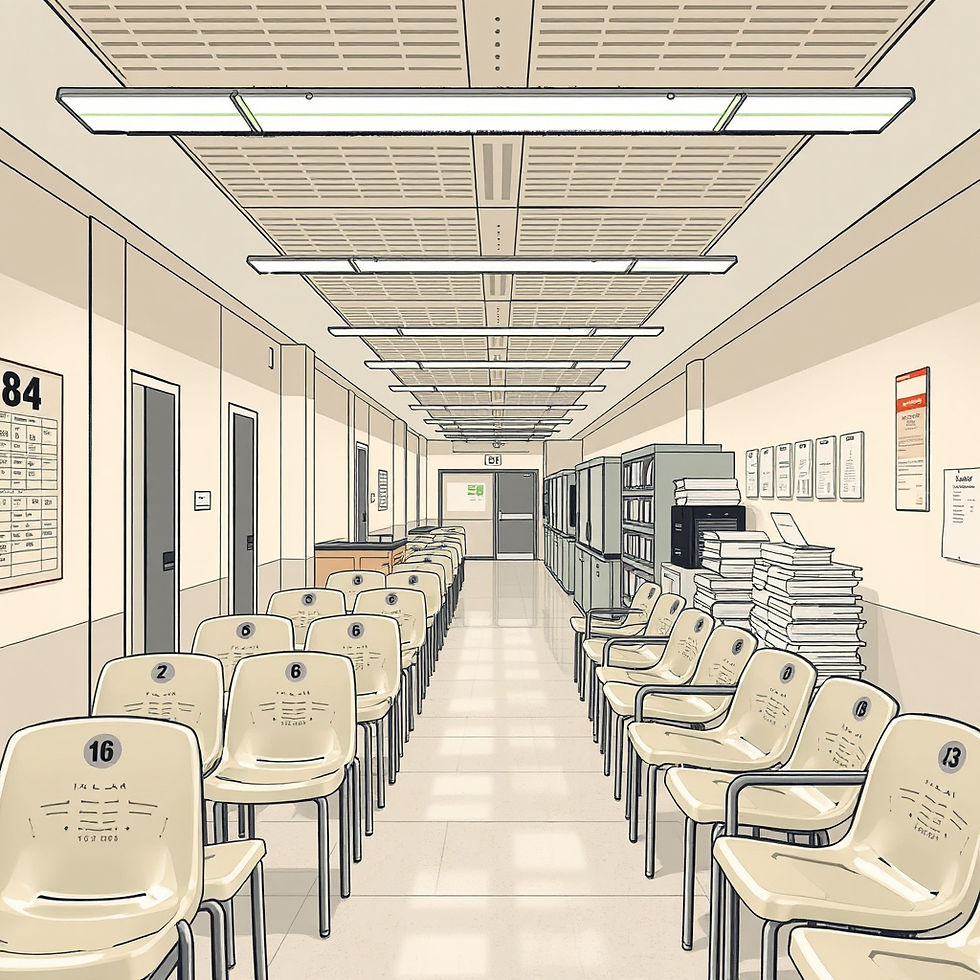
City hall visits can also feel mentally exhausting.
Not necessarily because staff are unfriendly.
But because the experience often involves:
waiting
navigating counters
interpreting documents
and trying not to misunderstand important information
Even people who love Japan sometimes admit that Japanese bureaucracy becomes one of the most emotionally tiring parts of daily life.
Why Navigating Japanese Bureaucracy Can Feel Emotionally Exhausting
I think many people underestimate how mentally heavy bureaucracy becomes when combined with relocation stress.
Because it is rarely just “forms.”
At the same time, people may also be:
adapting culturally
learning the language
searching for community
dealing with loneliness
renovating homes
or rebuilding life completely
So even small bureaucratic tasks can suddenly feel emotionally overwhelming.
Especially in the beginning.
Japanese Bureaucracy Becomes Easier Over Time
At the same time, most foreigners gradually adapt.
The systems start becoming familiar.The terminology becomes less intimidating.The city hall visits become more routine.
And eventually, many people develop their own systems for handling life in Japan more confidently.
But I do think realistic conversations about Japanese bureaucracy are important.
Because moving to Japan is not only about scenery, food, or lifestyle.
It is also about learning how to navigate entirely different systems.
Final Thoughts on Japanese Bureaucracy
Japanese bureaucracy is rarely the glamorous side of moving abroad.
But it is one of the most real parts of daily life here.
And honestly, understanding this side of Japan early can prevent a lot of unnecessary stress later.
Because the people who adapt best are usually not the people expecting perfection.
They are usually the people willing to slowly learn how life here actually works.
Moving to Japan is exciting.
But eventually, everyday life becomes less about the fantasy version people imagine online and more about learning how to function comfortably inside a completely different system.
I think that adjustment is what surprises many foreigners the most.
Join Akiya & Beyond
Akiya & Beyond is a private community for foreigners navigating life, property ownership, and long-term living in Japan.
Inside, members discuss:
Japanese bureaucracy
city hall procedures
taxes and health insurance
rural Japan realities
renovation challenges
and the emotional side of rebuilding life in Japan


Comments