.png)
How to buy an akiya in Japan: a foreign buyer's 2026 walkthrough

What akiya really costs, where the listings actually are, and the steps that take you from first search to keys in hand.
What is an akiya
An akiya is a vacant residential property. The word means "empty house" in Japanese, and in practice it covers everything from a tidy suburban home that has sat unoccupied for a year to a rural farmhouse left empty after the owner passed away. Japan's national housing survey counts vacant homes in the millions, driven by an aging population and decades of rural depopulation. The category that gets the most attention is the long-term abandoned stock in shrinking towns, which is where the very low prices come from.
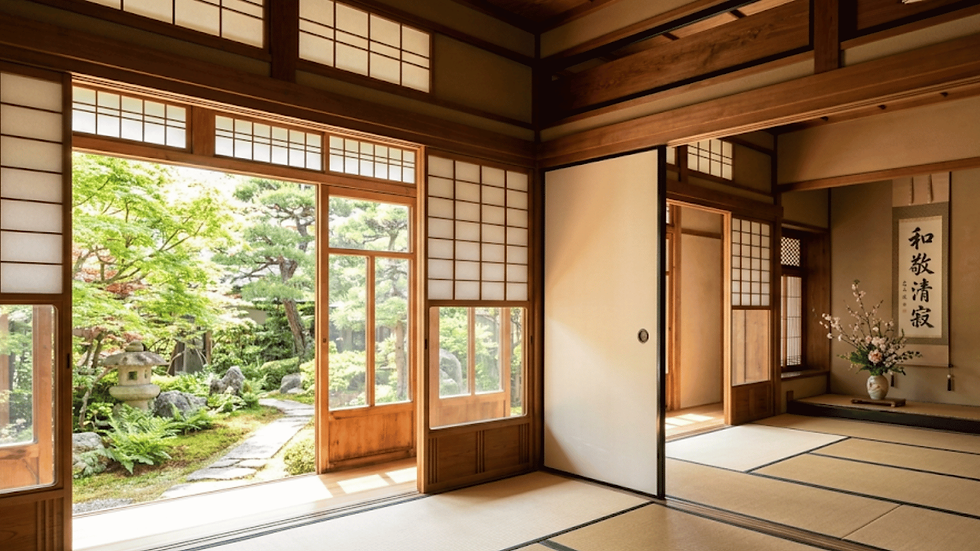
A related term you will see often is kominka, a traditional wooden farmhouse. Not every akiya is a kominka, and not every kominka is cheap. The label tells you the architectural style, not the condition or the price.
Background reading from the source: Japan's Ministry of Land, Infrastructure, Transport and Tourism (MLIT) defines and tracks vacant housing, and the national vacancy figures come from the Statistics Bureau housing and land survey.
Can foreigners buy an akiya in Japan?
Yes. There is no nationality restriction on owning real estate in Japan. You can buy land and buildings with the same legal rights as a Japanese citizen, whether or not you hold a Japanese visa or live in the country. There is no minimum purchase price and no government approval step specific to foreign buyers.
One point causes more confusion than any other, so it is worth stating plainly: buying property does not grant you a visa or any residency rights. If you want to live in your akiya full-time, you still need to qualify for a long-term visa on its own merits. The house can be a vacation home, a project, or an investment if your status only allows short stays, but the property itself creates no right to remain.
If you want to pressure test whether buying fits your situation before you go deeper, the free decision tool on Hello Akiya walks you through the basic eligibility and goal questions in a few minutes.
What an akiya actually costs
The listing price is the opening line, not the total. This is the single most common place foreign buyers underestimate, so here is the full picture.
Purchase price. Rural akiya commonly list somewhere between a few hundred thousand and several million yen. National listing data in 2026 put the median around the mid four-million-yen range, with the cheapest prefectures lower and metro-adjacent properties higher. Truly free or near-free homes exist, usually tied to a commitment to renovate and live in the property, and they tend to be the most remote and the most work.
Transaction costs. On top of the price you pay, brokerage commission, revenue stamp duty on the contract, registration and license tax, a judicial scrivener fee (commonly in the range of 80,000 to 150,000 yen), and real estate acquisition tax that arrives months after closing. Together, these typically add roughly 10 to 20 percent on top of the purchase price, and the percentage runs higher on the cheapest houses because the fixed costs do not shrink with the price.
Renovation. This is where the real money goes. Renovation frequently costs three to five times the purchase price, and budget overruns of 20 to 30 percent are normal because older homes hide their worst problems behind walls and under floors. A sensible planning rule is to budget 130 to 150 percent of your first estimate. A full revival of a traditional farmhouse can run from several million yen into the high teens or beyond.
Ongoing costs. Annual fixed asset tax, insurance, utilities, and basic upkeep continue whether or not you live there, so budget for the first year of holding costs even before you move in.
To model your own numbers rather than rely on ranges, the Japan property purchase cost calculator lets you enter a target price and see purchase costs, taxes, and a renovation buffer in one view. To screen a specific listing for the issues that blow up budgets, the due diligence kit gives you the checklist that the cheap-house headlines leave out.
Where to find Akiya for sale
There is no single national database. Listings are spread across several channels, each with different incentives.
Akiya Banks. These are municipal databases of vacant homes whose owners have registered them for sale or rent. There are well over a thousand of them, one per municipality, each with its own layout and inquiry process, and most are Japanese-language only. They are often the source of the very cheapest properties, and also the most rural.
Major property portals. SUUMO, At Home, and LIFULL HOMES list properties from licensed agencies across the country, including many older and lower-priced homes. They are Japanese-language but searchable with translation, and they hold far more inventory than the akiya banks.
English-language platforms. Several private services aggregate listings and add English support. They reduce the language barrier and usually charge a fee or commission for it.
A note on agents, because it matters for budgeting. A licensed real estate agent is legally part of the transaction in Japan, so that is not an optional cost you can skip. What is optional is the layer of foreigner-focused concierge or buying packages that some services sell on top, which can run into the thousands of dollars. You can choose to pay for convenience, but you should know which costs are mandatory and which are a service you are electing to buy.
The buying process, step by step
The sequence is consistent across most purchases, with some variation between Akiya-Bank deals and open-market sales.
Search and shortlist. This is usually the longest phase. Translate the listing fields before you fall for the photos, since the technical terms (price, land area, building area, construction date, structure, road access, zoning) tell you more than the pictures do.
View the property. Inspect in person or send someone you trust. Walk the full perimeter of the lot, not just the rooms. The property viewing checklist covers what to verify on site, from road access and water and drainage to signs of termite and structural damage.
Arrange an inspection. Japan does not require sellers to provide an inspection report, so this is on you. A modest inspection fee can expose problems that would cost millions to fix.
Make an offer and sign the contract. Both sides typically have agents. The contract requires revenue stamps and a deposit.
Pay and register. Most non-resident foreign buyers pay cash by international wire, often through an escrow arrangement rather than directly to the seller. A judicial scrivener prepares and files the ownership registration at the Legal Affairs Bureau. Property transfers must be registered to be legally effective.
File the required report. Non-resident buyers have a post-acquisition reporting obligation (covered in the next section).
What changed for foreign buyers in 2026
Two updates are worth knowing before you buy, both of which add paperwork rather than restrict your right to purchase.
Nationality disclosure at registration. Foreign buyers now disclose nationality as part of the real estate registration process. This lengthens processing slightly and adds a form. It does not gate the purchase.
Foreign exchange reporting. Under Japan's revised Foreign Exchange and Foreign Trade Act, non-resident foreign buyers must generally file a post-acquisition report with the Ministry of Finance, via the Bank of Japan, within 20 days of acquiring the property. As of April 1, 2026, this applies in many cases that were previously exempt, including homes bought for personal or vacation use. A judicial scrivener or agent often assists with the filing, but you should confirm it is being handled rather than assume. Reference points: the Ministry of Finance and the Bank of Japan.
Farmland is a separate question. If a listing advertises a "house with a garden," confirm whether that land is classified as farmland. Non-residents and short-term visa holders generally cannot acquire agricultural land, and the rules tightened in 2025. Buying farmland usually requires long-term residence status and a genuine intention to farm.
Financing. There is no straightforward mortgage path for a non-resident foreigner buying a rural vacant house. Lenders that work with foreign residents still tend to require a Japanese residence, local income, and eligible collateral. Plan on cash, and prepare source-of-funds documents before settlement, since large inbound transfers trigger bank compliance questions.
Renting your akiya on Airbnb
Short-term rental is possible, but it is governed by Japan's minpaku rules and varies by municipality. The national framework caps private-home short-term rental at 180 nights per year, and some areas add their own restrictions or, in designated tourist zones, exceptions. Zoning and property type both affect whether a given akiya qualifies, so this is a check to run before you buy if rental income is part of your plan, not after. The Airbnb reality guide lays out the 180-night cap, the municipal variation, and which property types tend to qualify.
Is buying an akiya worth it
Honestly, it depends on what you want from it. An akiya tends to make sense as a lifestyle or use-value purchase: a home, a base in Japan, a project. It rarely makes sense as a pure financial investment. Most akiya sit in markets where land values are flat or declining, the buildings depreciate, and resale liquidity is thin. The buyers who are happiest treat the renovation as the cost of getting a place they want to use, not as money they expect to get back.
The deciding factors are usually condition, road access, zoning, and clean ownership history, not the headline price. A 500,000-yen house with an access problem or an unresolved inheritance can cost you far more than a higher-priced house that is ready to transfer.

Frequently asked questions
Can foreigners buy an akiya in Japan? Yes. Japan places no nationality restriction on property ownership, and you do not need a visa or residency to buy. Owning the property does not grant you a visa, though.
How much does an akiya cost? Listing prices commonly run from a few hundred thousand yen to several million, with a national median in the mid-four-million-yen range in 2026. Add roughly 10 to 20 percent for transaction costs, then renovation, which often costs three to five times the purchase price.
Are Akiya houses really free? A small number are offered for nominal sums, usually tied to a commitment to renovate and occupy the property. They are typically the most remote and need the most work. Free is the price tag, not the total cost.
Does buying property in Japan give you a visa? No. Ownership confers no residency right. You need to qualify for a long-term visa separately to live in Japan.
Can I get a mortgage to buy an akiya as a foreigner? For non-residents, rarely. Most foreign buyers pay cash. Some lenders work with long-term foreign residents who have local income, but rural vacant houses are hard to finance.
Can I rent my akiya on Airbnb? Sometimes. Japan's minpaku rules cap private short-term rentals at 180 nights per year and vary by municipality and zoning. Confirm eligibility before you buy.
Next step
If you want the full process in one place, with the field-translation glossary, the cost and tax breakdowns, the due diligence steps, and the document templates, that is what The Akiya Guide is built for. If you are still deciding whether to start, run the free decision tool first.

Comments