.png)
Why Cheap Japanese Houses (akiya)Are Not Always a Bargain

If you’ve spent any time looking at Japanese real estate online, you’ve probably seen them.
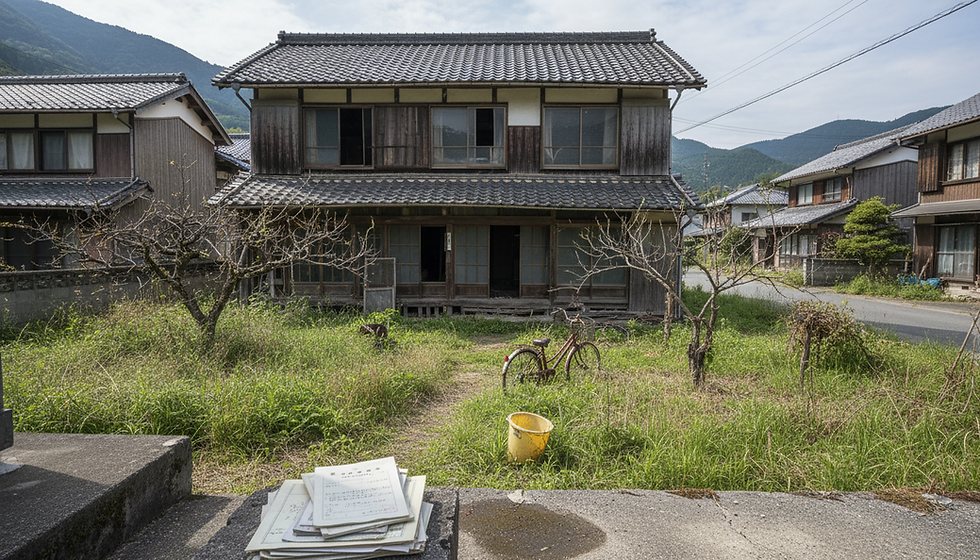
Beautiful old houses in the countryside. Traditional wooden beams. Sliding doors. Maybe even an engawa looking out into a quiet garden.
And then you see the price.
$5,000.$10,000.Sometimes even less.
At first, it almost feels fake.
I understand the fascination because honestly, I’ve always been a real estate fanatic myself. Years ago, when I lived in California, I even got licensed just because I loved looking at properties and floor plans so much. I still browse homes the way some people browse Netflix.
But after spending a lot of time researching akiya and old Japanese homes, one thing became very clear to me:
Cheap Japanese houses are often cheap for a reason.
That doesn’t mean they’re bad investments. Some are incredible opportunities. But many foreigners jump into the idea emotionally before understanding what they’re actually buying.
And in Japan, that can become expensive very quickly.
The Listing Price Is Only One Part of the Story
This is probably one of the biggest misunderstandings people have about akiya in Japan.
The house itself may cost only a few thousand dollars, but buyers are often surprised by the additional expenses involved both during and after the purchase.
Costs During the Purchase Process
These can include:
Legal fees
Agent fees
Judicial scrivener fees
Registration taxes
Acquisition taxes
Stamp taxes
Costs That Often Come After Purchase
Depending on the condition of the property, buyers may also face:
Roof repairs or replacement
Plumbing updates
Electrical rewiring
Septic system repairs
Insulation upgrades
Pest and termite treatment
Demolition costs
Transportation and logistics in remote areas
Ongoing maintenance
Annual property taxes
Sometimes renovating an old Japanese house can cost far more than buying the property itself.
Especially if the house has been vacant for years.
Many Akiyas have serious structural problems
One thing people outside Japan often underestimate is the climate here.
Japan is humid. Very humid.
And humidity slowly destroys houses over time.
Wood rot, mold, warped floors, leaking roofs, and termite damage are extremely common in vacant homes. Some houses are also located in areas with heavy snowfall, typhoons, or earthquake risks.
A house may look charming in photos while hiding major issues underneath.
I learned this myself while working on my own cabin-related project. One of the biggest realities I had to face was how harsh nature can be here — heat, insects, moisture, and constant maintenance.
The romantic image and the physical reality can be very different things.
Renovation in Japan Is Not Always Simple
Another misconception is that renovating an akiya works the same way it might in the United States or Europe.
Japan has its own systems, rules, and expectations.
In some rural areas:
Contractors can be difficult to find
Older craftsmen are retiring
Communication may become difficult if you don’t speak Japanese
Materials can take time to source
Renovation costs may fluctuate more than expected
And then there’s the issue of older building standards.
Some houses were built before modern earthquake regulations. Others may not legally qualify for certain renovations without upgrades.
This is where many buyers suddenly realize how dependent they are on local knowledge.
Cheap Houses in Japan Are Often Cheap Because of Location
A lot of akiya are located deep in rural Japan.
And while that sounds peaceful — and sometimes it truly is — daily life can become difficult if you are not prepared.
You may find:
No nearby supermarkets
Limited hospitals
Poor public transportation
Aging populations
Few job opportunities
Very little English support
Some villages are beautiful but isolated.
That isolation is part of why the homes became abandoned in the first place.
The Emotional Fantasy Around Akiya Is Very Powerful
I think this is the part people rarely talk about honestly.
The fantasy is incredibly attractive.
Especially if you are tired of expensive cities, endless rent, or modern life in general.
You see an old Japanese house surrounded by nature and imagine a slower, simpler life.
And sometimes that dream is possible.
But the house alone will not magically create that life.
There is still maintenance. Community relationships. Isolation. Bugs. Heat. Cold winters. Repairs. Local expectations. Bureaucracy.
Real life eventually enters the picture.
That doesn't make the dream bad. It just means it needs to be approached realistically.
So, Are Cheap Japanese Houses Worth It?
Sometimes yes.
Sometimes absolutely not.
That is the question only you, as a buyer, can answer.
The buyers who tend to succeed are usually the people who:
Research heavily before buying
Visit properties in person
Understand renovation realities
Budget conservatively
Stay patient and flexible
Respect local communities
Treat the process as a long-term project
The people who struggle most are often the ones chasing a fantasy without understanding the system behind it.
Final Thoughts From Miso
Honestly, I understand why people become obsessed with Akiya.
I became obsessed, too.
That curiosity is actually one of the reasons I started Hello Akiya in the first place. I realized so many foreigners were trying to navigate a very complicated system with fragmented information and unrealistic expectations from social media.
Japan absolutely has hidden gems.
But the listing price is only one part of the story.
And understanding the realities behind these properties is probably one of the most important things before buying an abandoned house in Japan.



Comments