.png)
Cheap Japanese Houses: Why Some Homes Cost Less Than a Used Car
- Hello Akiya

- May 26
- 3 min read
Updated: Jun 3
The first time most people see a Japanese house selling for the price of a used car, they assume something must be wrong.
Honestly, I thought the same thing.
You scroll through listings and suddenly see:
a detached house
land included
surrounded by nature
sometimes even partially renovated
And the price is:
$8,000
$12,000
sometimes even less
If you live somewhere like California, London, Toronto, or Sydney, it almost feels fake.
But cheap Japanese houses are very real.
And once you start researching akiya seriously, you begin to realize these prices are usually connected to much bigger realities happening across rural Japan.

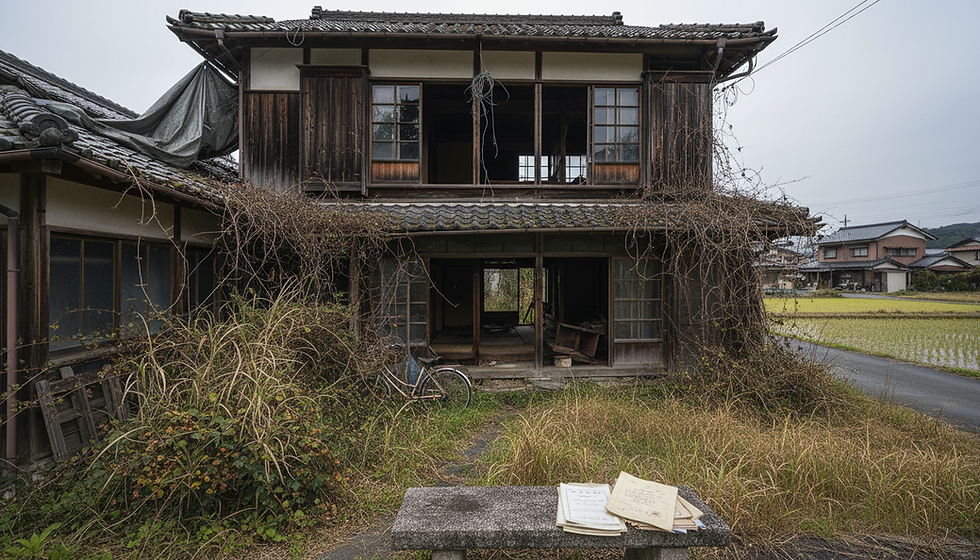
One of the biggest misunderstandings foreigners have is assuming cheap Japanese houses are automatically “hidden gems.”
Sometimes they are.
But many are inexpensive because demand simply disappeared.
Large parts of rural Japan are dealing with:
aging populations
depopulation
shrinking local economies
abandoned infrastructure
younger generations moving to cities
As families leave countryside areas, homes often sit vacant for years.
Over time, some properties become difficult for owners or heirs to maintain, especially if they live far away.
That’s one reason so many akiya eventually enter the market at surprisingly low prices.
In Japan, Houses Often Lose Value Over Time
This is another thing that surprises many foreigners.
In some countries, people expect homes to steadily increase in value.
Japan often works differently.
In many cases:
the land holds value
while the building itself depreciates over time
Especially in rural areas.
Older homes may eventually be viewed more as:
maintenance responsibilities
or
demolition projects
rather than appreciating assets.
That doesn’t mean cheap Japanese houses are worthless.
But it does explain why pricing can look shocking to overseas buyers.
Some Cheap Japanese Houses Need Serious Repairs
This is where reality usually enters the picture.
A cheap house in Japan may also come with:
roof damage
termite issues
mold
outdated plumbing
old electrical systems
insulation problems
earthquake reinforcement concerns
And because Japan is humid, vacant homes can deteriorate surprisingly quickly.
Sometimes the renovation costs become far more expensive than the purchase price itself.
This is why looking only at the listing price can be misleading.
This is actually one of the things I check when researching listings for people through my listing decoding service, because many foreign buyers don’t realize how different two similar-looking properties can be once you start checking flood maps, slope conditions, infrastructure, and maintenance realities.
Rural Isolation Is a Bigger Factor Than Many People Expect
A lot of cheap Japanese houses are located in deeply rural areas.
And while countryside life can be beautiful, it can also feel isolating if you are not prepared for it.
Some properties may be:
far from hospitals
far from train stations
located in shrinking villages
difficult to access during heavy weather
limited in internet infrastructure
This is one of the biggest things listing photos rarely communicate properly.
The house itself may look charming.
But daily life in that area could feel completely different from what you imagined.
One thing I’ve noticed while researching listings is that photos almost never communicate the feeling of isolation properly. A property may look peaceful online but still be 40 minutes from basic services or reliable internet.
Earthquakes and Hazard Maps Matter Too
Another thing many buyers overlook at first is disaster risk.
Japan deals with:
earthquakes
landslides
flooding
typhoons
heavy snowfall in some regions
And many cheap Japanese houses are older properties built long before modern seismic standards.
That doesn’t automatically make them unsafe.
But it does mean buyers should research:
building age
hazard maps
slope conditions
maintenance history
local geography
carefully before purchasing.
Honestly, this confusion is one of the reasons I started offering personalized listing decoding reports through Hello Akiya. I realized many buyers were trying to make huge decisions based on photos and partial translations alone.
The Fantasy Around Cheap Japanese Houses Is Very Powerful
I honestly think this is part of why akiya content spreads so quickly online.
People are tired.
Tired of:
impossible housing prices
endless rent
crowded cities
financial pressure
modern life in general
So when they see cheap Japanese houses online, it feels like an escape route.
And honestly, I understand that feeling.
I became fascinated with akiya myself.
But over time, I realized the reality behind these properties is usually far more complicated than the viral videos make it seem.
The listing price is only one small piece of the story.
Over time, I found myself spending hours researching listings anyway — checking hazard maps, nearby infrastructure, internet availability, hospitals, and practical livability — which eventually led me to turn that process into a personalized research service for buyers who want a clearer picture before committing to a property.


Comments